The First Nationwide NHK Broadcast in 1928
The theme of this English language resource is "learning casual English through real events."
The theme of this English resource is "Learn casual English through real events."
Section 1: NHK's Historic First Broadcast
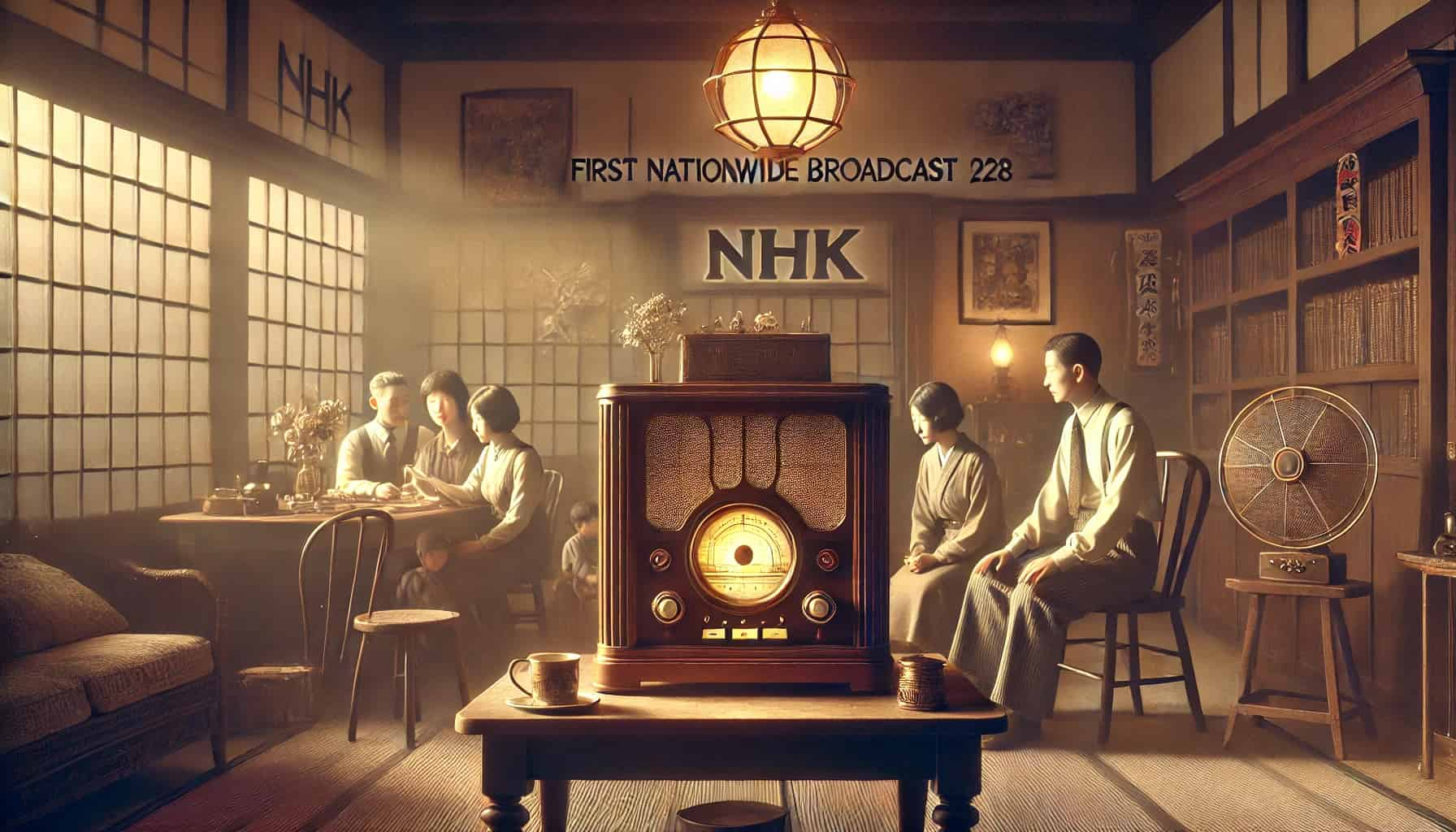
In 1928, NHK made history This monumental event marked the beginning of a new era in communication, allowing people across the country to hear the same news and programs for the first time. It was a groundbreaking moment that united the Japanese people in a shared experience. It was a groundbreaking moment that united the Japanese people in a shared experience.
Q1: When did NHK conduct its first nationwide broadcast?
Sample Answer:. NHK conducted its first nationwide broadcast in 1928.
Q2: Why was the first nationwide broadcast considered historic?
Sample Answer:. It was historic because it marked the beginning of a new era in communication and allowed people across Japan to hear the same news and programs for the first time. time.
Q3: What was the significance of the broadcast?
Sample Answer:. The broadcast was significant because it united the Japanese people in a shared experience.
Now, let's talk using idioms.
Let the students choose one favorite idiom and make an example sentence.
Idiom Explanation:. "Made history".
Made history means to do something very important or significant that will be remembered.
Example Sentence: NHK made history in 1928 with its first nationwide broadcast.
Section 1: NHK's first historical broadcast
In 1928, NHK made history with Japan's first nationwide radio broadcast. This landmark event marked the dawn of a new era in communication, allowing people across the country to hear the same news and programs for the first time. This was a pivotal moment that brought the people of Japan together in a shared experience.
Q1: When was NHK's first national broadcast?
Sample Responses:. NHK made its first national broadcast in 1928.
Q2: Why did you consider your first national broadcast historic?
Sample Responses:. It heralded the dawn of a new era in communication, for for the first time people across the country could listen to the same news and programs.
Q3: What was the importance of that broadcast?
Sample Responses:. The broadcast was important in that it connected the people of Japan in a shared experience.
Idioms Explained:. "I'm going to go down in history."
inscribe one's name in history means doing something that is very important and will be remembered by future generations.
Example Sentences:. NHK made history in 1928 with its first national broadcast.
Section 2: Challenges of Broadcasting Nationwide

Broadcasting nationwide in 1928 was no easy task. NHK faced numerous technical challenges, such as setting up transmission towers and ensuring the signal reached distant regions. Despite these obstacles, NHK Pulled through and succeeded in delivering a unified broadcast that reached listeners all over Japan.
Q1: What challenges did NHK face during the first nationwide broadcast?
Sample Answer:. NHK faced technical challenges, such as setting up transmission towers and ensuring the signal reached distant regions.
Q2: How did NHK overcome the challenges of broadcasting?
Sample Answer:. NHK's determination paid off, and they succeeded in delivering a unified broadcast.
Q3: Why was broadcasting nationwide in 1928 difficult?
Sample Answer:. It was difficult because they had to set up transmission towers and ensure the signal reached distant regions.
Now, let's talk using idioms.
Let the students choose one favorite idiom and make an example sentence.
Idiom Explanation:. "Pulled through".
Pulled through means to overcome difficulties or a challenging situation successfully.
Example Sentence: Despite the challenges, NHK pulled through and successfully broadcasted nationwide.
Section 2: National Broadcasting Issues
Broadcasting nationwide in 1928 was no easy task, and NHK faced numerous technical challenges, such as setting up transmission towers and ensuring that signals could reach remote areas. Despite these obstacles, NHK overcame the difficulties and succeeded in delivering a unified broadcast to listeners nationwide.
Q1: What challenges did NHK face during its first national broadcast?
Sample Responses:. NHK faced technical challenges such as setting up transmission towers and ensuring that signals could reach remote areas.
Q2: How did NHK overcome its broadcasting challenges?
Sample Responses:. NHK's determination paid off, and it succeeded in delivering a unified broadcast.
Q3: Why was it so difficult to broadcast nationally in 1928?
Sample Responses:. This was difficult because of the need to install transmission towers and ensure that the signal could reach remote areas.
Idioms Explained:. Overcome difficulties
Overcoming Difficulties means successfully overcoming difficulties and challenging situations.
Example Sentences:. Despite various challenges, NHK overcame difficulties and succeeded in broadcasting nationwide.
Section 3: The Impact of the Broadcast

The impact of NHK's first nationwide broadcast was profound. People from all walks of life could hear the same news and entertainment, fostering a sense of national unity. People from all walks of life could hear the same news and entertainment, fostering a sense of national unity. paved the way for future advancements in broadcasting technology and set the standard for media communication in Japan.
Q1: What was the impact of NHK's first nationwide broadcast?
Sample Answer:. It allowed people from all walks of life to hear the same news and entertainment, fostering a sense of national unity.
Q2: How did the broadcast affect the future of media in Japan?
Sample Answer:. It paved the way for future advancements in broadcasting technology and set the standard for media communication.
Q3: What sense did the broadcast foster among the Japanese people?
Sample Answer:. The broadcast fostered a sense of national unity among the Japanese people.
Now, let's talk using idioms.
Let the students choose one favorite idiom and make an example sentence.
Idiom Explanation:. "Paved the way".
Paved the way means to create a situation in which something can happen or develop more easily.
Example Sentence: The first nationwide broadcast paved the way for future advancements in broadcasting technology.
Section 3: Broadcast Impact
The impact of NHK's first national broadcast was enormous. People from all walks of life could hear the same news and entertainment, creating a sense of national unity. This event paved the way for future advances in broadcasting technology and set the standard for media communication in Japan.
What was the impact of NHK's first nationwide broadcast?
Sample Responses:. People from all walks of life could hear the same news and entertainment, creating a sense of national unity.
Q2: How has broadcasting affected the future of media in Japan?
Sample Responses:. It paved the way for future advances in broadcasting technology and set the standard for media communication.
Q3: What kind of feeling did the broadcasts create among the Japanese people?
Sample Responses:. The broadcasts fostered a sense of national unity among the Japanese people.
Idioms Explained:. "I paved the way."
Paved the way. means to create a situation in which something happens or develops more easily.
Example Sentences:. The first national broadcast paved the way for future advances in broadcasting technology.