
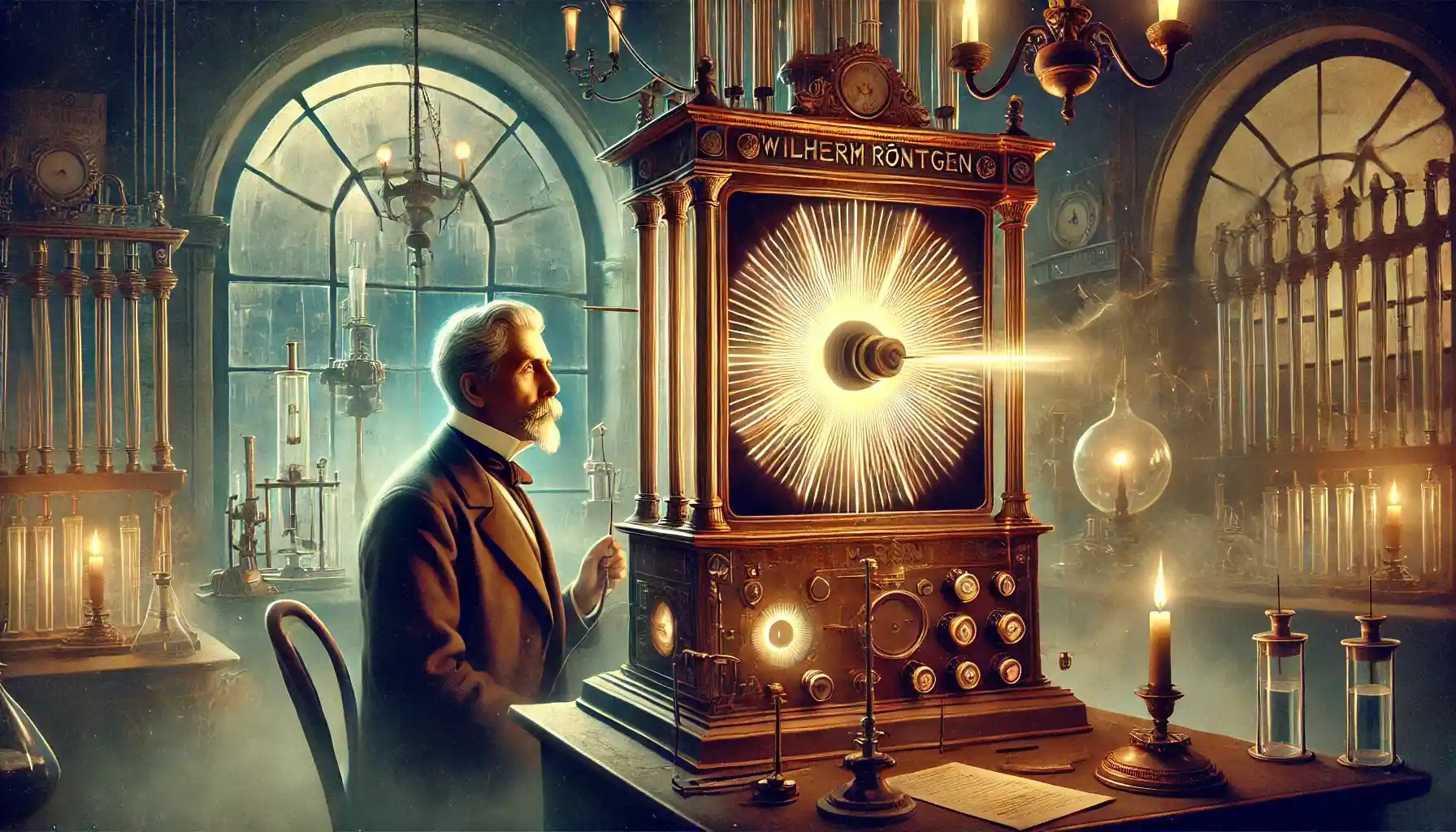
Wilhelm Röntgen's Discovery of X-rays: A Revolution in Medicine
The theme of this English language resource is "learning casual English through real events."
The theme of this English resource is "Learn casual English through real events."
Section 1: Discovery of X-rays by Wilhelm Röntgen
On November 8, 1895, Wilhelm Röntgen, a German physicist, made a groundbreaking discovery Röntgen was experimenting with cathode rays when he noticed a mysterious light that could pass through most materials, revealing objects hidden from the naked eye. This remarkable finding led to the first X-ray image, which was of his wife's hand, showing her bones and even her wedding ring. The discovery was so astonishing that it earned Röntgen the first Nobel Prize in Physics in 1901.
Q1: What is the What discovery did Wilhelm Röntgen make on November 8, 1895?
A1: A2: A3: A4: A5: A6: A7: A8: A9 He discovered X-rays, which can pass through most materials and reveal hidden structures.
Q2: What is the What did Röntgen's first X-ray image depict?
A2: A2: A2: A2: A2 It depicted his wife's hand, showing her bones and her wedding ring.
Q3: What is the Why was Röntgen awarded the first Nobel Prize in Physics?
A3: A3: A3: A3: A3: A3: A3 He was awarded the prize for his discovery of X-rays, which significantly impacted the field of medicine.
Now, let's talk using idioms.
Let the students choose one favorite idiom and make an example sentence.
Idioms in Section 1:"Groundbreaking discovery."
- This idiom means a discovery that is very important and new, one that changes how things are done.
Example: The "The invention of the smartphone was a groundbreaking discovery in communication technology."
Section 1: Discovery of X-rays by Wilhelm Röntgen
On November 8, 1895, German physicist Wilhelm Röntgen made a discovery that changed the history of medicine forever. He discovered X-rays. While experimenting with cathode rays, Röntgen discovered a mysterious light that could project objects invisible to the naked eye. This amazing discovery led to the first X-ray image being taken, which showed his wife's hand, down to the bones and wedding ring. The discovery was so extraordinary that Röntgen was awarded the first Nobel Prize in Physics in 1901 for his work.
Q1: What did Wilhelm Röntgen discover on November 8, 1895?
A1: He discovered X-rays. It can pass through most materials and reflect hidden structures.
Q2: What did the first x-ray image on the x-ray depict?
A2: It showed his wife's hand, with bones and a wedding ring.
Q3: Why did Röntgen win the first Nobel Prize in Physics?
A3: He was awarded the prize because of his discovery of X-rays, which had a profound impact on the field of medicine.
Section 1 Idioms
Groundbreaking discovery": This is an idiom that refers to a very important, new discovery that changes the way things are done.
E.g., "The invention of the smart phone was a breakthrough in communications technology."
Section 2: Early Applications of X-rays
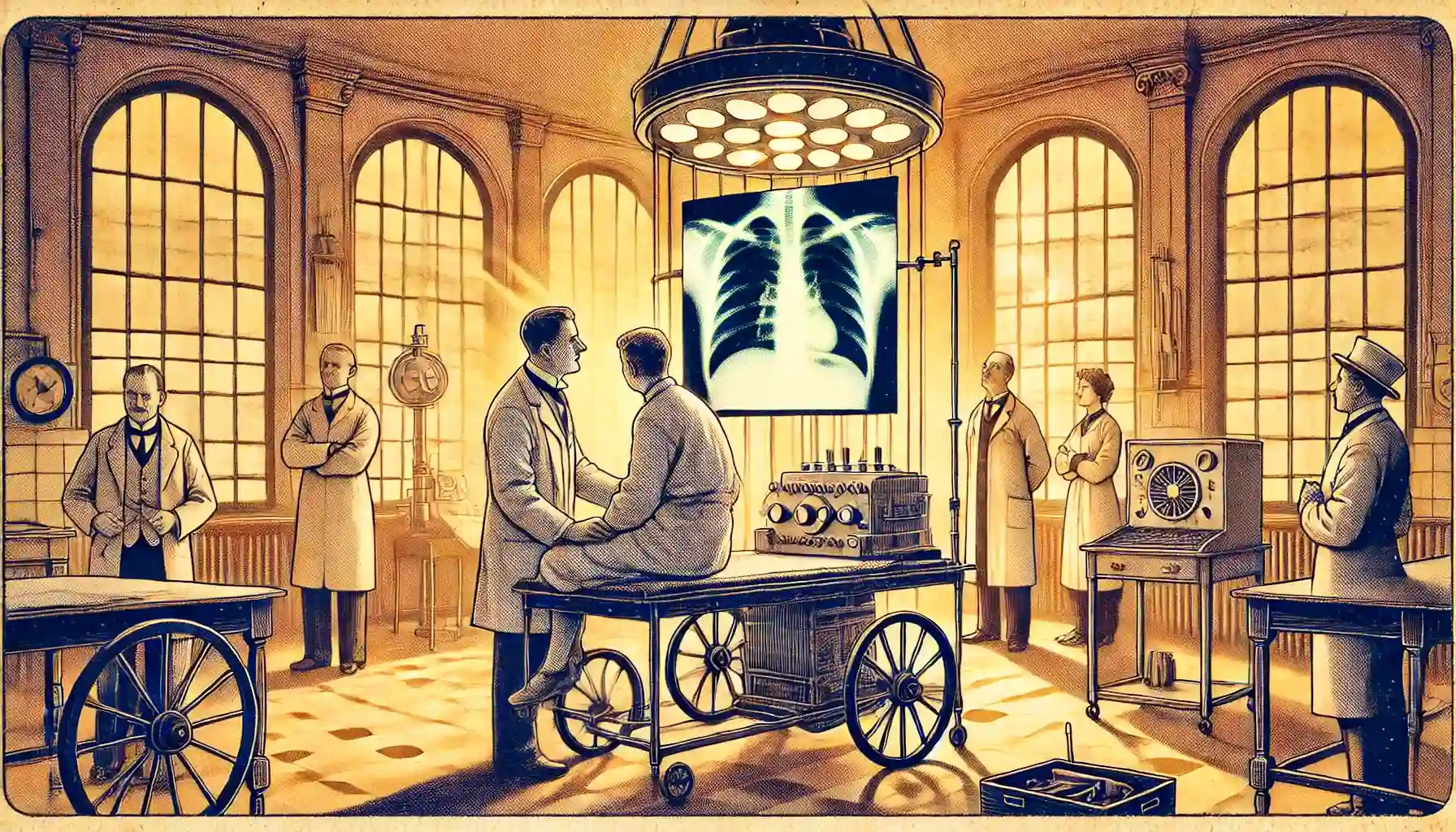
Shortly after Röntgen's discovery, X-rays quickly found their way into hospitals and medical practices. Doctors realized that these Doctors realized that these mysterious rays could allow them to see inside a patient's body without surgery, which was revolutionary for diagnosing bone fractures and other internal issues. In the early days, people were fascinated by the ability to "see through"objects, and X-ray machines were even used for novelty purposes at fairs, though the dangers of radiation were not well understood at the time.
Q1: What is the How did doctors initially use X-rays after their discovery?
A1: A2: A3: A4: A5: A6: A7: A8: A9 They used X-rays to see inside patients' bodies, which helped in diagnosing fractures and other internal conditions.
Q2: What is the What fascinated people about X-rays in the early days?
A2: A2: A2: A2: A2 People were fascinated by the ability to "see through" objects, which was a novelty at the time.
Q3: What is the What was a common misconception about X-rays in their early usage?
A3: A3: A3: A3: A3: A3: A3 People did not understand the dangers of radiation and often used X-rays for entertainment without realizing the risks.
Now, let's talk using idioms.
Let the students choose one favorite idiom and make an example sentence.
Idioms in Section 2:"See through."
- This idiom means to understand or see inside something, often in a literal or metaphorical sense.
Example: The "She could see through his excuses and knew he was not telling the truth."
Section 2: Early Applications of X-Rays
Shortly after the discovery of X-rays, they were soon introduced into hospitals and medical practices. Doctors realized that these mysterious rays could be used to see inside a patient's body without surgery, and they were revolutionary in their ability to diagnose fractures and other internal problems. At the time, people were fascinated by the ability to "see through" objects, and X-ray machines were sometimes used at festivals as a spectacle, but the dangers of radiation were not fully understood at that time.
Q1: How did doctors use X-rays after their discovery?
A1: They utilized X-rays to look inside the patient's body to diagnose fractures and other internal problems.
Q2: In the early days, what attracted people to x-rays?
A2: People were fascinated by the ability to "see through" objects, because at the time it was rare.
Q3: What were some common misconceptions about the initial use of X-rays?
A3: People did not understand the dangers of radiation, often using X-rays for entertainment, and were not aware of the risks.
Section 2 Idioms
See through: This idiom means to understand the inner workings or essence of something, literally or figuratively.
E.g., "She saw through his excuses and knew he wasn't telling the truth."
Section 3: Impact of X-rays on Modern Medicine

Today, X-rays are an essential tool in the medical field, used for a wide variety of diagnostic purposes-from dental checkups to detecting lung conditions and even guiding surgeons during operations. The discovery of X-rays paved the way for other medical imaging technologies like CT scans and MRIs, providing doctors with non-invasive ways to diagnose and treat. Röntgen's discovery has truly "stood the test of time," proving invaluable to healthcare professionals around the globe.
Q1: What is the How are X-rays used in modern medicine?
A1: A2: A3: A4: A5: A6: A7: A8: A9 X-rays are used for various diagnostic purposes, such as dental checkups, detecting lung issues, and guiding surgeons.
Q2: What is the What other medical imaging technologies did X-rays pave the way for?
A2: A2: A2: A2: A2 X-rays led to the development of other imaging technologies like CT scans and MRIs.
Q3: What is the What does it mean when we say that Röntgen's discovery "stood the test of time"?
A3: A3: A3: A3: A3: A3: A3 It means that the discovery has remained valuable and useful even many years after it was first made.
Now, let's talk using idioms.
Let the students choose one favorite idiom and make an example sentence.
Idioms in Section 3:"Stood the test of time".
- This idiom means something has proven to be durable or valuable over a long period of time.
Example: The "The classic novel has stood the test of time, still being read and appreciated today."
Section 3: The Impact of X-Rays on Modern Medicine
Today, X-rays are an indispensable tool in the medical field and are used for a variety of diagnostic purposes, from dental exams to detecting lung disease and even guiding during surgery. the discovery of X-rays paved the way for other medical imaging technologies such as CT scans and MRIs, providing physicians with a non-invasive way to diagnose and treat patients. noninvasively diagnose and treat patients. The discovery of x-rays has "stood the test of time" and is of great value to medical professionals around the world.
Q1: How are X-rays used in modern medicine?
A1: X-rays are used for a variety of diagnostic purposes, including dental examinations, detection of lung problems, and guiding during surgery.
Q2: What other medical imaging technologies have paved the way for x-rays?
A2: X-rays have led to the development of other imaging technologies such as CT scans and MRI.
Q3: What do you mean when you say that X-Ray's discovery "has stood the test of time"?
A3: That means that this discovery is still valuable and useful after all these years.
Section 3 Idioms
Stood the test of time: this idiom means to remain valuable after a long period of time.
E.g., "Its classic novels have stood the test of time and are still read and appreciated today."



Disclaimer:
This English language material is based on content generated using ChatGPT with modifications. While every care has been taken to ensure the accuracy of the information, it may contain errors. We are not responsible for any damages caused by the use of this material.