
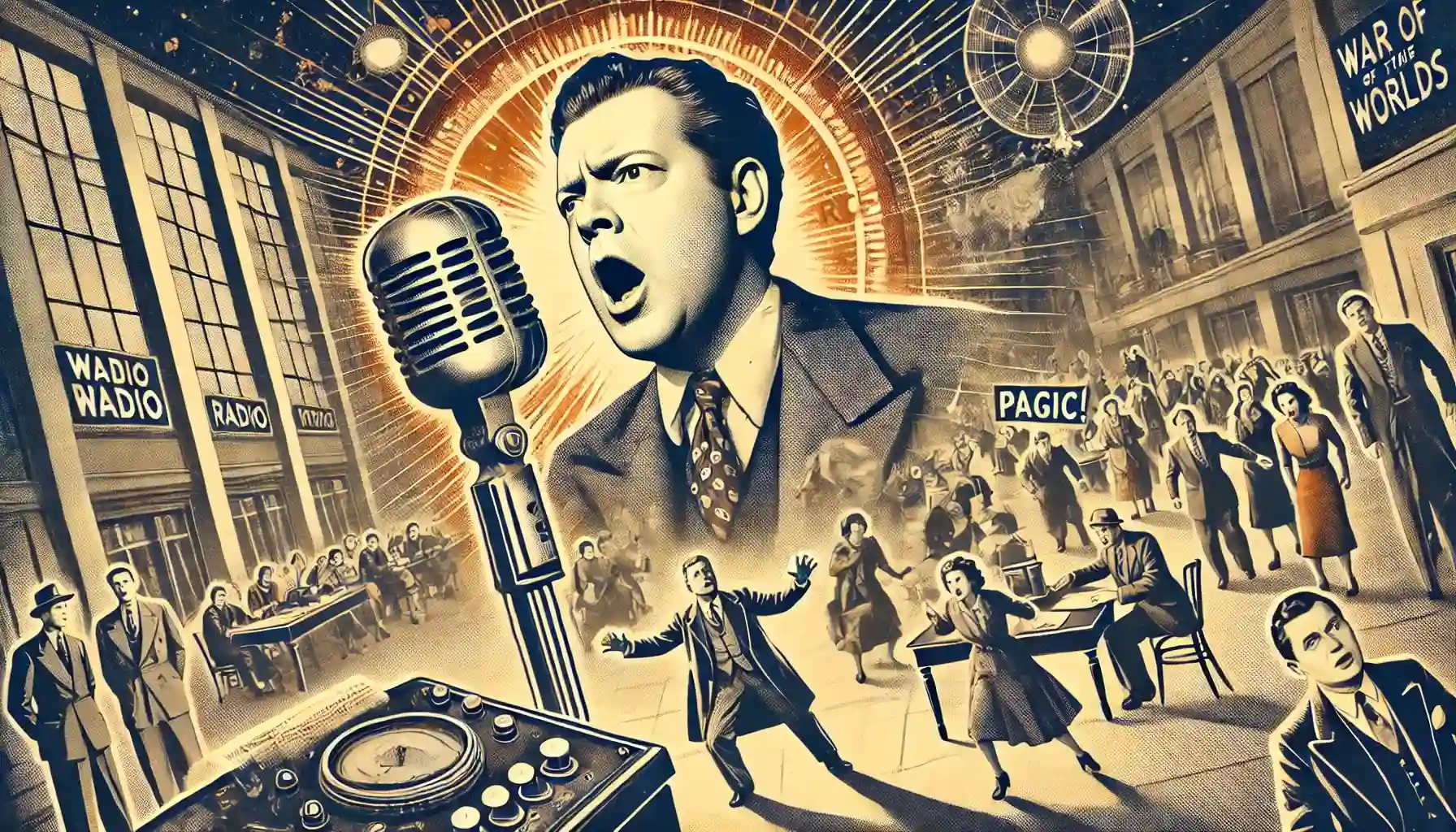
The infamous broadcast of "The World War" wreaks havoc
The theme of this English language resource is "learning casual English through real events."
The theme of this English resource is "Learn casual English through real events."
Section 1: The Infamous Broadcast of "War of the Worlds"
On October 30, 1938, Orson Welles aired the famous radio drama "War of the Worlds. Many listeners who tuned in after the show had already begun mistook the fictional Martian invasion for an actual news event. Panic spread, with people thinking they were witnessing a real extraterrestrial attack. left its mark on media history, showing just how powerful the medium could be when the audience wasn't fully prepared.
Q1: What are your thoughts on this part of the article?
Sample AnswerIt really shows how much people trusted the radio as a source of information back then. source of information back then."
Q2: Create a question excerpted from this article.
Sample Answer: "Why did so many people mistake the radio drama for real news?"
Q3: How would you sum up this section in a few words?
Sample Answer: "Realistic broadcast causes panic."
Now, let's talk using idioms.
Let the students choose one favorite idiom and make an example sentence.
Idiom used: "Left its mark".
Explanation: This idiom means to have a lasting impact or influence on something.
Example Sentence: "The radio drama left its mark on media history, showing how influential broadcasting could be."
Section 1: Famous "Space Wars" Radio Broadcasts
On October 30, 1938, Orson Welles broadcast his famous radio drama "The Space War." The drama was broadcast in the style of an occasional newscast and sounded very realistic. Many listeners who began listening during the program mistook the fictional Martian invasion for real news. The result was widespread panic among those who thought a real Martian attack was taking place. This radio drama had a major impact on media history and showed how powerful the media can be when audiences are not fully prepared.
Q1: What do you think about this part?
sample answer: "It's interesting that a radio drama could cause such massive panic! It really shows how much people trusted the radio as a source of information back then."
Q2: Please create a question taken from this article.
sample answer: "Why did so many people mistake a radio drama for real news?"
Q3: Summarize this section in a few words?
sample answer: "Realistic broadcasts cause panic."
Idioms used: "Left its mark".
Description.: This idiom means to have a lasting impact or influence on something.
model sentence: "That radio drama left its mark on media history and showed how influential broadcasting can be."
Section 2: The Power of Media and Public Reaction
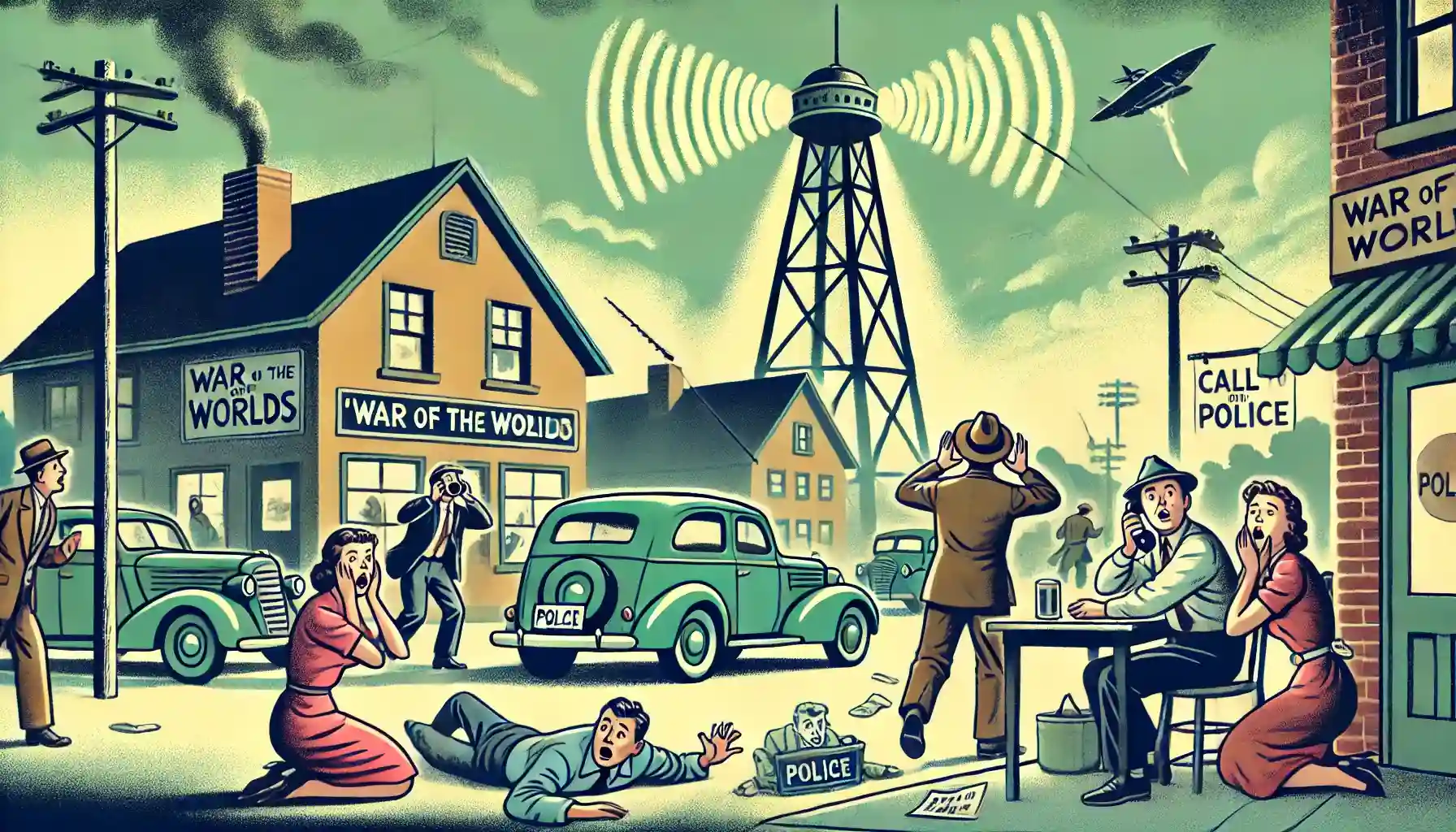
The panic caused by "War of the Worlds" highlighted just how much influence media could have over the public. During the broadcast, people fled their homes, called the police, and some even gathered supplies, convinced that Martians had landed. The event became an example of how easily misinformation could spread if delivered in a convincing manner. think critically about the information they receive, especially from mass media.
Q1: What are your thoughts on this part of the article?
Sample Answer: "It's surprising how quickly people can panic when they hear something unexpected, especially from a trusted source. makes you realize the power of media."
Q2: Create a question excerpted from this article.
Sample Answer: "How did people react to the broadcast, and what does it tell us about the power of the media?"
Q3: How would you sum up this section in a few words?
Sample Answer: "Media influence and public panic."
Now, let's talk using idioms.
Let the students choose one favorite idiom and make an example sentence.
Idiom used: "Think critically"
Explanation: This idiom means to analyze and evaluate information in a careful and rational way rather than accepting it at face value.
Example Sentence: "The broadcast taught people to think critically about the information they receive."
Section 2: The Power of the Media and Public Reaction
The panic created by "Space Wars" highlighted just how much influence the media can have over the public. During the broadcast, many people fled their homes, called the police, and some even gathered supplies, believing that Martians had landed. This event served as a powerful example of how easily misinformation can spread when it is presented in a convincing manner. It served as a warning that people need to think critically about the information they receive, especially from the mass media.
Q1: What do you think about this part?
sample answer: "It's amazing how quickly people panic when they hear something unexpected from a reliable source. It makes you realize the power of the media."
Q2: Please create a question taken from this article.
sample answer: "How do people respond to broadcasts and what does that tell you about the power of the media?"
Q3: Summarize this section in a few words?
sample answer: "Media Influence and Public Panic."
Idioms used: "Think critically"
Description.: This idiom implies a careful and rational analysis and evaluation of information, rather than accepting it as is.
model sentence: "That broadcast taught people to think critically about the information they receive."
Section 3: Legacy and Cultural Impact
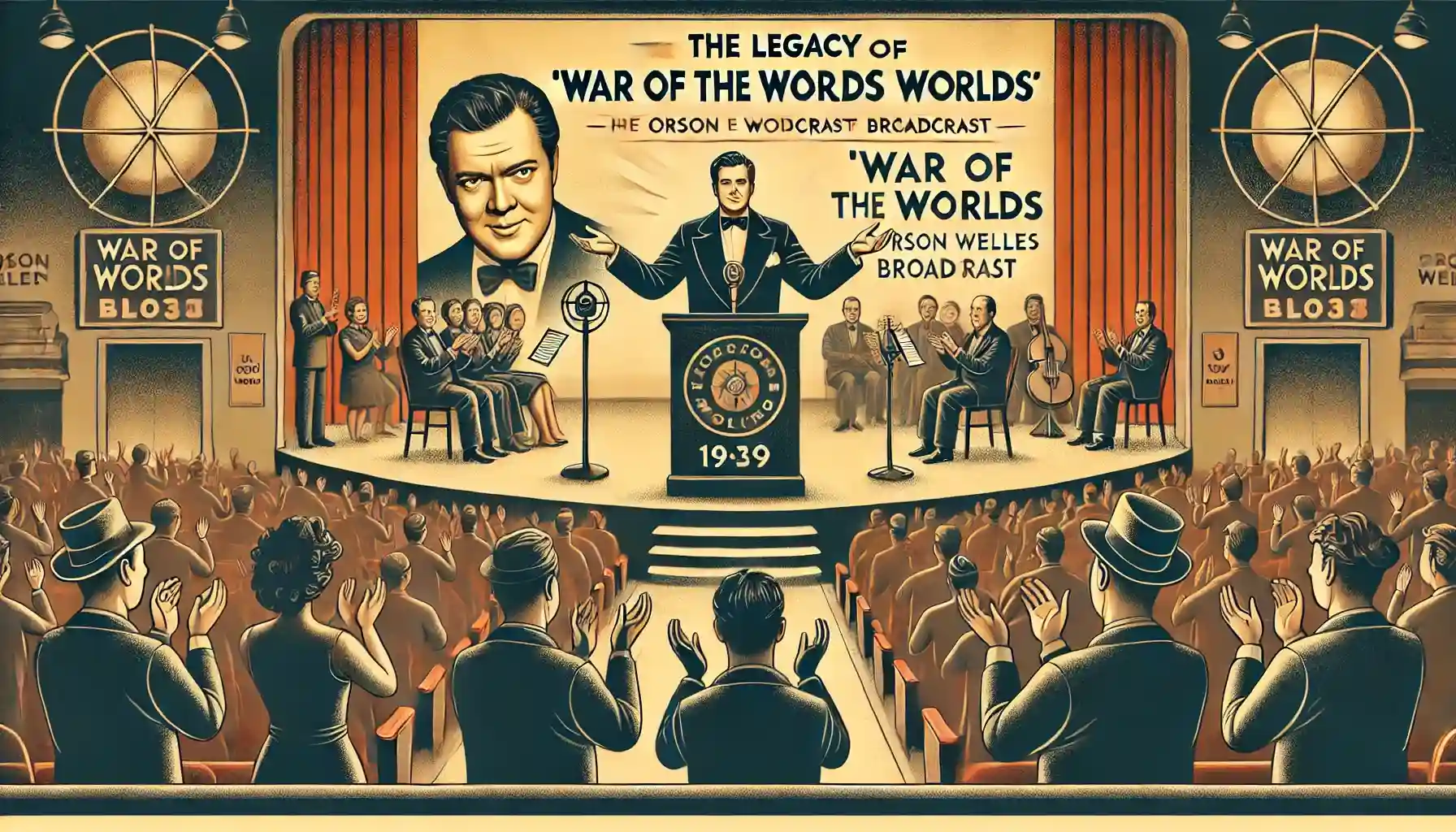
The impact of the "War of the Worlds" broadcast is still felt today. It also influenced the regulation of broadcasting standards to prevent similar misunderstandings. Welles, who directed the broadcast, became an overnight sensationThe incident even inspired other works of art and led to numerous studies on media influence and public behavior.
Q1: What are your thoughts on this part of the article?
Sample AnswerIt's incredible how this single broadcast shaped both Orson Welles' career and future broadcasting standards. It shows the importance of responsible storytelling."
Q2: Create a question excerpted from this article.
Sample Answer: "What impact did the 'War of the Worlds' broadcast have on future broadcasting standards?"
Q3: How would you sum up this section in a few words?
Sample Answer: "Broadcast's legacy and impact."
Now, let's talk using idioms.
Let the students choose one favorite idiom and make an example sentence.
Idiom used: "Overnight sensation".
Explanation: This idiom means to become famous or well-known very quickly, often unexpectedly.
Example Sentence: "Orson Welles became an overnight sensation after the 'War of the Worlds' broadcast."
Section 3: Heritage and Cultural Impacts
The impact of the "Space Wars" broadcasts is still being felt today. It remains a classic example of the power of storytelling and the influence of media on viewers. It also influenced the regulation of broadcast standards to prevent similar misconceptions. Orson Welles, who oversaw the broadcast, became a celebrity overnight and his career skyrocketed. The event also influenced other works of art and spawned numerous studies on media influence and public behavior.
Q1: What do you think about this part?
sample answer: "It is amazing how this single broadcast has influenced Orson Welles' career and future broadcasting standards. It shows the importance of responsible storytelling."
Q2: Please create a question taken from this article.
sample answer: "How has the broadcast of 'Space Wars' affected future broadcast standards?"
Q3: Summarize this section in a few words?
sample answer: "The Legacy and Impact of Broadcasting."
Idioms used: "Overnight sensation".
Description.This idiom means becoming famous in a very short period of time. Often, it happens in an unexpected way.
model sentenceOrson Welles became famous overnight after the broadcast of "The War of the Worlds."